






Buy your weekday smoothies and get your weekend ones for free. (7 for the price of 5!)
WELLNESSWEEK

A camping oven is a portable oven that runs on a gas stove or another heat source and works through indirect heat, much like a regular oven.
A camping oven is heated from below, while a lid or special design distributes the heat inside. This creates even top and bottom heat, allowing you to bake.
Typical features:
In summary:
A camping oven lets you bake on the go—simply, flexibly, and without relying on electricity.
Yes, you can bake bread in a camping oven without any problems, as long as the temperature is kept even.
The indirect heat allows the dough to rise and form a crust, just like in a conventional oven. The key is to maintain a constant temperature and allow enough baking time.
Things to keep in mind:
Bottom line:
Baking bread in a camping oven works reliably and, with a little practice, produces very good results.
Baking in a camping oven usually takes just as long as in a regular oven. The exact time depends on the dish, temperature, and heat source.
Typical baking times:
Conclusion:
With a little practice, you can consistently achieve good baking results in a camping oven.
In a camping oven, you can prepare almost all typical oven dishes - from bread and pizza to casseroles and cakes.
Thanks to its even heat distribution, the oven is suitable for both sweet and savory dishes.
Typical dishes:
Conclusion:
A camping oven gives you much more flexibility on the go and greatly expands your outdoor kitchen.
Yes, a camping oven can often replace a built-in oven in a motorhome, especially if you want to save space and stay flexible.
Advantages over built-in appliances:
Conclusion:
For many campers, a camping oven is the more flexible solution, but frequent users benefit from the convenience of a built-in oven.
The best camping oven is one that combines compact size, even heat distribution, and ease of use. That’s exactly what the RoadBaker was designed for.
When camping or living the van life, it’s important to be able to bake reliably on the go without needing much space or electricity. The RoadBaker combines the benefits of a classic camping oven with greater convenience and better baking results.
Why many campers prefer the RoadBaker:
Compared with other camping ovens, the RoadBaker gives you more control while baking and is especially practical for everyday camping.
Conclusion:
If you’re looking for a versatile, space-saving, and easy-to-use camping oven, the RoadBaker is one of the best solutions for camping, van life, and off-grid travel.

With the RoadBaker, you can turn your gas stove into a portable oven and enjoy fresh oven-baked dishes while camping, such as bread, pizza, casseroles, or cake.
Yes, a camping oven can easily be used in a motorhome and is a practical alternative to a built-in oven for many campers.
Most camping ovens simply run on a gas or camping stove and don’t require an additional power connection. This makes them ideal for vanlife, campervans, and off-grid travel.
Advantages in a motorhome:
What should you keep in mind?
Conclusion:
A camping oven is a flexible, space-saving solution for a motorhome, letting you bake and cook fresh food on the go—even without a conventional oven.
Baking in a tent or awning is only recommended with adequate ventilation and by following safety rules. Open flames and gas appliances should never be used in enclosed, poorly ventilated spaces.
Camping ovens generate heat and are often gas-powered. This can lead to oxygen depletion, carbon monoxide exposure, or fire hazards if they are used improperly.
Important safety rules:
Especially important:
Gas appliances should preferably be used outdoors or in very well-ventilated awnings.
Conclusion:
With the right safety precautions, a camping oven can be used in an awning. Safety and adequate ventilation should always be the top priorities.
For van life, a camping oven should be compact and lightweight, yet large enough for everyday meals. The RoadBaker offers the ideal balance between saving space and having enough room to bake.
Every inch of storage space counts in a camper or motorhome. An oven that's too large takes up unnecessary space, while very small models quickly reach their limits when baking. That's why choosing the right size is essential.
Why the RoadBaker is the ideal size for van life:
The RoadBaker combines portability with enough capacity for typical camping meals, making it especially well suited to van life and off-grid travel.
Conclusion:
A good camping oven for van life should take up as little space as possible while still being versatile. The RoadBaker was designed specifically for this purpose and is the perfect size for baking on the go.
A camping oven generally uses only a small amount of gas because it runs on a standard gas stove. The exact consumption depends on the temperature, baking time, and stove output.
For typical dishes such as bread, pizza, or casseroles, gas consumption is usually moderate and comparable to regular cooking while camping.
These factors affect gas consumption:
An efficient camping oven like the RoadBaker distributes heat particularly evenly, which reduces energy loss and can optimize baking times.
Typical examples:
Bottom line:
Gas consumption from a camping oven is modest and usually not a problem when camping. With an efficient model like the RoadBaker, you can enjoy baking on the go without using much gas.
The most popular option for camping and van life. These models are placed directly on a gas stove and use indirect heat to create an oven effect.
Advantages:
The RoadBaker belongs to this category and combines a space-saving design with particularly even heat distribution.
These models have their own burner and work independently of the stove.
Advantages:
Disadvantages:
Permanently installed ovens, often combined with a stove or grill.
Advantages:
Disadvantages:
For campsites or motorhomes with a mains power connection.
Advantages:
Disadvantages:
Conclusion:
For most campers and van life travelers, compact stovetop ovens are the most practical option. They save space, weigh little, require no electricity, and still offer versatile ways to bake on the go.
Yes, a high-quality camping oven is especially worth it if you bake regularly and value better results, greater convenience, and a longer lifespan.
Budget models often get the job done, but they quickly reach their limits with daily use—for example, in heat distribution, temperature control, or ease of use. Higher-quality camping ovens like the RoadBaker are specifically designed to bake more evenly and reliably.
Why the RoadBaker costs more than basic models like OMNIA, VAMO, or ROCKTRAIL:
The improved heat distribution is especially noticeable when baking bread, pizza, or cake. The glass lid lets you check on your food at any time without lifting the lid and losing heat.
When is a premium camping oven especially worth it?
Conclusion:
A budget camping oven is sufficient for occasional baking. But if you bake on the go more often and want better results, you’ll benefit much more in the long run from a higher-quality model like the RoadBaker.

With the RoadBaker, you can easily bake fresh rolls in the morning and enjoy a warm breakfast on the go, just like at home. The even heat makes the rolls crispy on the outside and soft on the inside.
That depends a little on the type of bake-off item, e.g. 90 seconds at the highest heat, then 6-7 min. at slightly above the lowest heat. Alternatively, 10-12 minutes at slightly above the lowest heat.
Mix all the dry ingredients in a bag, then just add eggs/butter, etc. when you're ready to use it. Or put freshly prepared yeast dough in a bag (use a little less yeast than the recipe calls for). It can be stored in the refrigerator for up to a week.
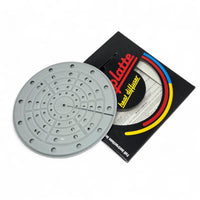
The ROADBAKER is a low-energy oven. Dishes are generally baked on the lowest heat. Some stove models, especially newer ones, have a very high kW output. A simmer plate (heat diffuser, e.g. the Truka brand) between the heat source and the oven ensures better heat distribution. This prevents food from burning. It is always important to bake over the lowest flame, or follow the ROADBAKER recipe instructions.
Sometimes the black stainless steel base of the ROADBAKER oven is forgotten. This causes the bottom of the ROADBAKER oven to overheat.
A thermometer is often used in an attempt to reach temperatures like those in a kitchen oven (180-220°). Since the grill thermometers used (third-party products) behave differently on the ROADBAKER lid than thermometers in a conventional oven, showing significantly lower temperatures inside the lid, the heat is consequently turned up, which then causes the bottom of the ROADBAKER oven to overheat.
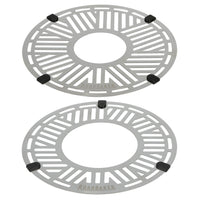
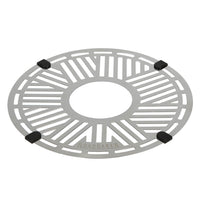
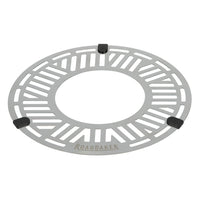
“Simmering” means something like “gentle bubbling.” The simmer plate, also known as a “heat diffuser,” prevents cookware from coming into direct contact with the heat source and reduces the temperature. The plate consists of a three-millimeter-thick base that ensures effective and even heat distribution. Small holes in the surface prevent direct heat transfer to the pot. This means dishes can no longer burn.
The glass panel on the RoadBaker can easily be reinstalled by hand.
Here you'll find a video showing how to reinstall the glass panel.
(+) Yes, the ROADBAKER is suitable for all gas burners.
Examples: Cadac, in general: Yes, they are compatible.
With the Cadac Grillo Chef at 30 mbar and the Cadac Safari Chef 2 at 50 mbar, even the lowest flame may still be too strong.
A heat diffuser/simmer plate placed between the burner and the ROADBAKER produces very good baking results.
(+) Yes, the ROADBAKER is suitable for electric stoves.
With electric stoves, the plate must be preheated before placing the ROADBAKER on it. Otherwise, allow extra time for the plate to heat up.
Examples: A 1500-watt electric stove is suitable; at setting 5 = approximately 170/180 degrees = the lowest heat setting on the ROADBAKER.
(+) Yes, the ROADBAKER is suitable for ceramic cooktops.
Use the lowest heat setting, around 2-3 on a dial that goes up to 9
(+) Yes, the ROADBAKER is suitable for alcohol stoves
Examples: The Dometic ORIGO 3000 works without affecting the taste with Primus methylated spirits or bioethanol on the lowest flame.
(+/-) In principle, the ROADBAKER can also be used on a gasoline stove if the flame is adjustable. However, odors from burning the gasoline may linger on the food.
Please contact your stove’s manufacturer and ask which fuels are suitable for cooking!
(-) Since the flame cannot be adjusted, unfortunately it is not suitable for the ROADBAKER. However, according to "Lotus," their customers also use the grill for portable ovens.
(-) The ROADBAKER is suitable for gas, electric, and liquid-fuel ovens. Not for induction cooktops.
With an induction cooktop, heat is generated only at the points of contact. As a result, no heat flows upward through the center of the flue. This is necessary for the oven to function, providing top and bottom heat. Adapter plates for induction cooktops are available commercially, but are not recommended because too little heat flows upward.


